Foot Care Treatment
by Foot Health Practitioner – Nicholas Felstead, Diploma Level 4 qualified, trained by the SMAE Institute
FOOT CARE TREATMENT INCLUDES AN INITIAL NEUROVASCULAR ASSESSMENT
Routine Foot Care £32
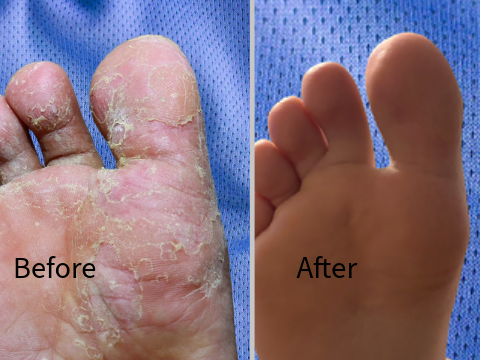
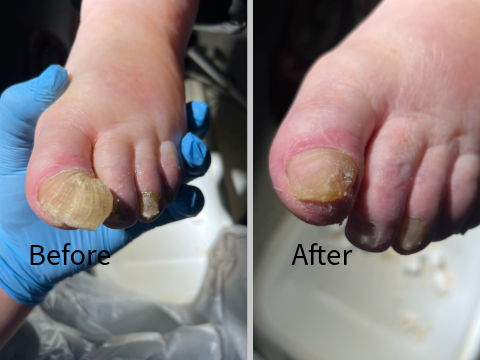
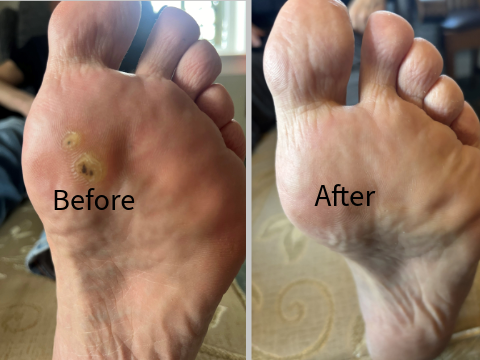
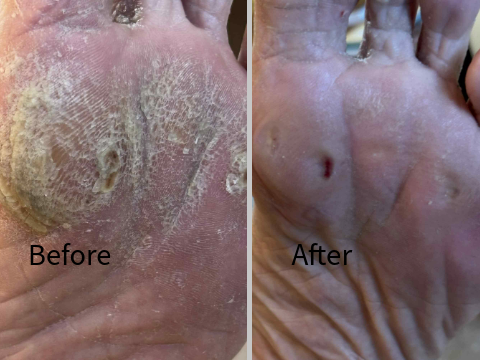
BEFORE
- Toenail Cut & File
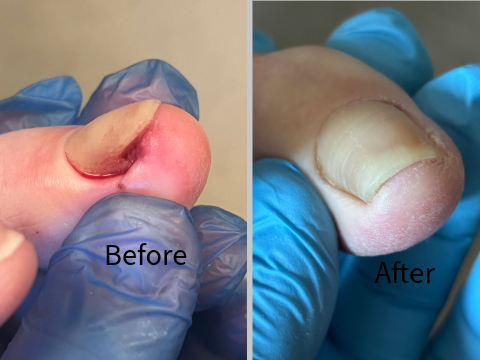
- Ingrown Toenails
- Corns & Calluses
- Verruca
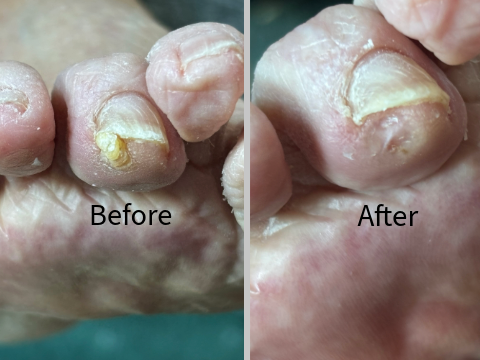
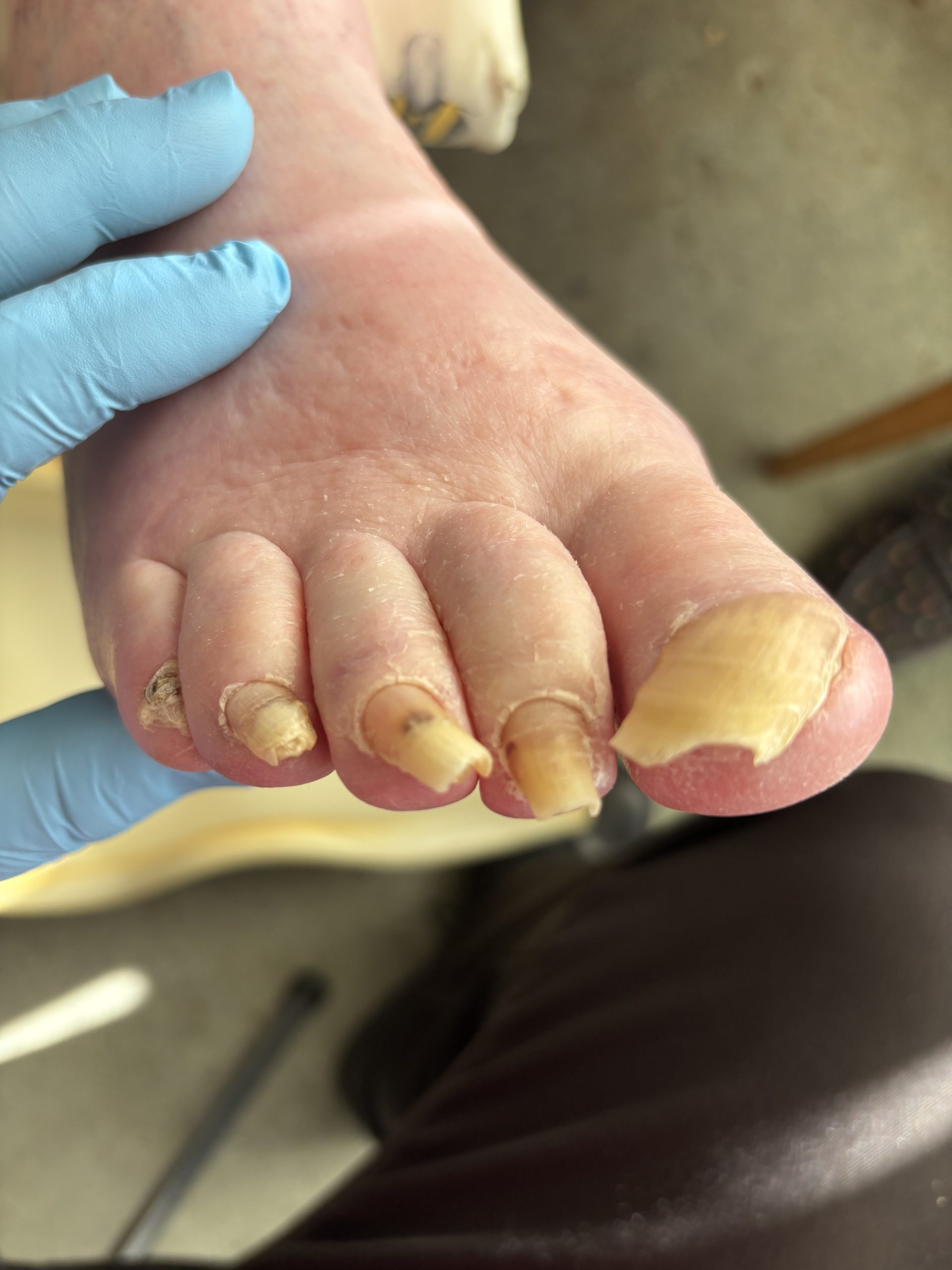
- Fungal Nail
- Thick Nail Reduction
- Athlete’s Foot
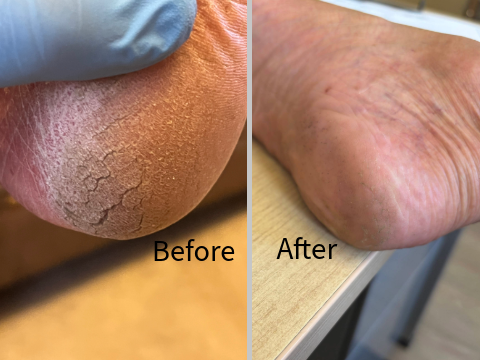
- Cracked Heels (Fissures)
- Diabetic Foot Care
- Fingernails +£10
We also offer Ear Wax Removal
Please read our Reviews
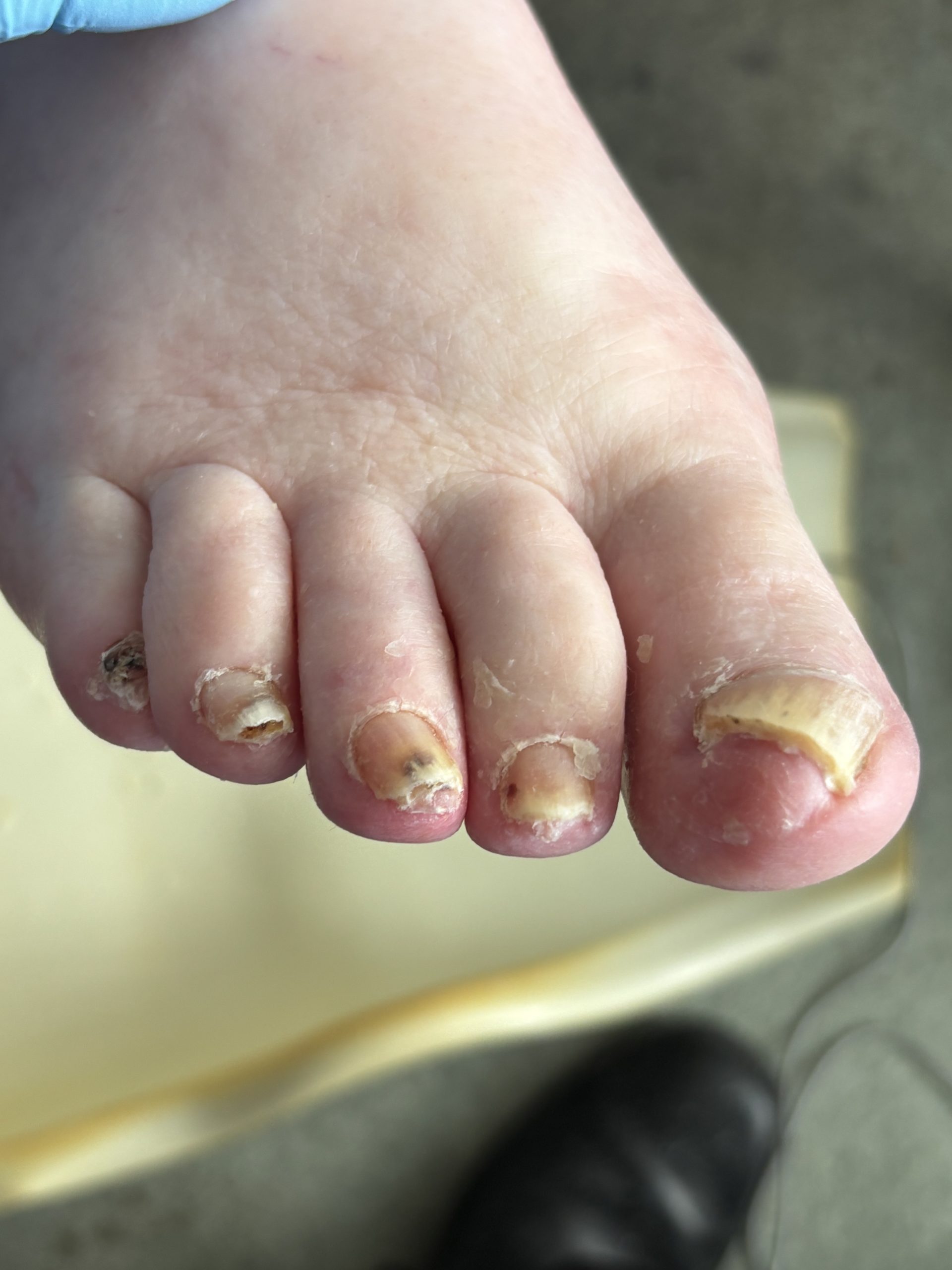
AFTER
LACUNA METHOD (Fungal Nail) – £40
This treatment creates micro holes in the nail so antifungal spray can reach the infection underneath: This stops the infection spreading and allows the damaged nail to grow out.
- Nail reduction & debridement
- First, we carefully thin the affected nails to reduce the thickness and remove loose, crumbly and fungal-infected nail material.
- Creating access channels (lacunae)
- Next, we create tiny micro-holes, within the nail plate.
- Antifungal application
- A professional-strength antifungal solution is applied directly into the micro-holes to target the fungal infection.
- Ongoing clearing as the nail grows
- As treatment continues, healthy nail gradually grows through. With ongoing follow-up visits to progressively clear away the affected nail material and help maintain nail clarity.
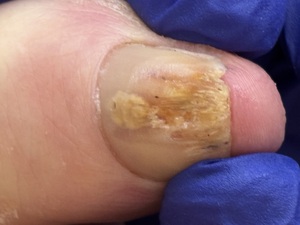
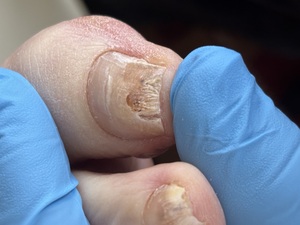
CRYOTHERAPY (Verruca / Wart) – £40
Cryotherapy Video
£40 for the first 3 Verrucae / Warts and £5 for each additional lesion
How it Works
- The device emits a high-pressure jet of Liquid Nitrous Oxide (N₂O) at approximately -89°C directly onto the Verruca.
- Procedure:– Each application typically lasts from 5 to 30 seconds.
- Ice crystals form inside the targeted cells. This sudden freezing process damages the abnormal tissue, allowing the treatment to focus precisely on the verruca.
- This also triggers an immune response, helping the body to fight the Human Papilloma Virus (HPV).
- The healing process typically takes around 1–3 weeks. Within the first 24–48 hours, a small blister or scab may develop and some mild redness or temporary pigmentation changes may occur.
- While many Verrucae clear in one session, stubborn verrucae may require 2 to 4 treatments spaced several weeks apart.
VERRUTOP (Verruca) – £35

- Verrutop is a new professional treatment for verrucae;
- The area is parred down, removing all dead skin;
- Applied by a Foot Health Practitioner;
- The nitri-zinc complex kills the wart tissue by breaking down its protein structure, while leaving the underlying healthy skin intact;
- 80% of patients see clearance within 4 applications;
- Verrutop is suitable for adults & children over 5yrs;
- Pain free;
- Possible skin colour change may occur;
- Surgical spirit is to be applied twice daily;
- The procedure is repeated every 2 weeks for up to 6 applications;
Foot Care – PATIENT INFORMATION
Difference between Corns & Calluses
Corns are small and deep, with a hard central core, being painful especially when pressed. They are typically found on the tops or sides of toes and the bottom of the foot
Calluses are larger, flatter areas of thickened skin that are usually painless. They commonly develop on the soles of the feet or heels;
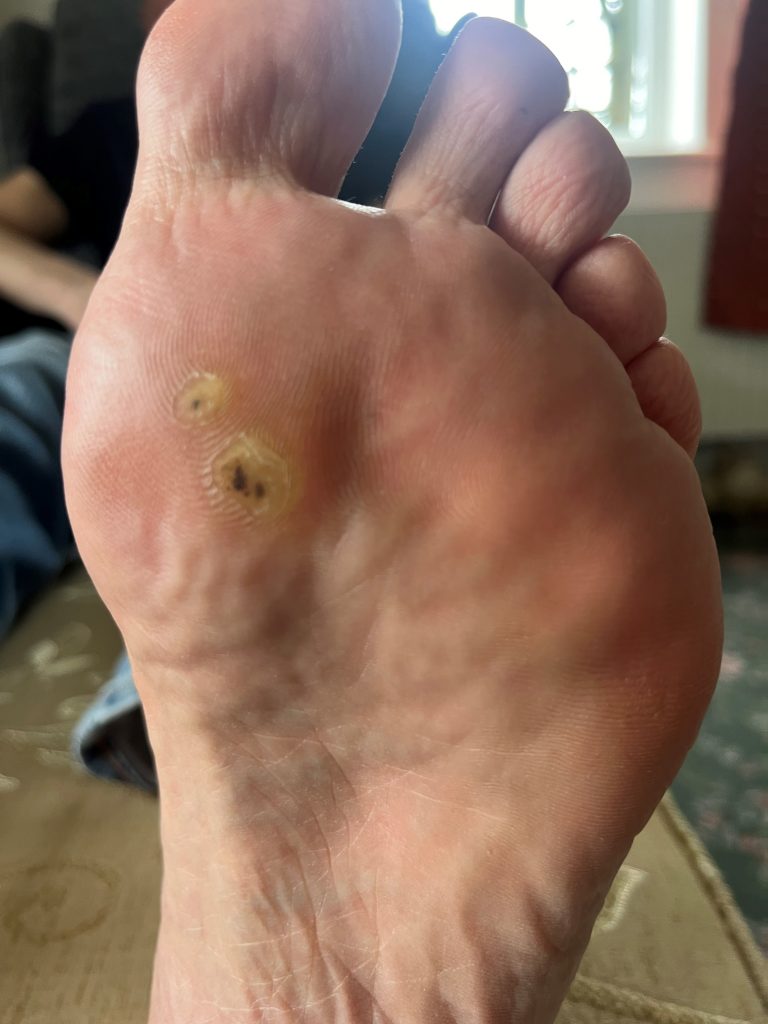
Difference between Verrucas & Calluses
Verrucas are usually more painful when squeezed from the sides and often have a small black dot in the middle.
Calluses often appear yellowish with thickened skin, and only tend to hurt when very thick and direct pressure is applied.
Another way to tell the difference is by looking at the skin lines: they tend to go around a verruca, but run straight through a callus.
Don’t ignore foot pain it can change the way you walk and may lead to problems with your knees, hips or back.
Various foot conditions, please click on photo title for more information